
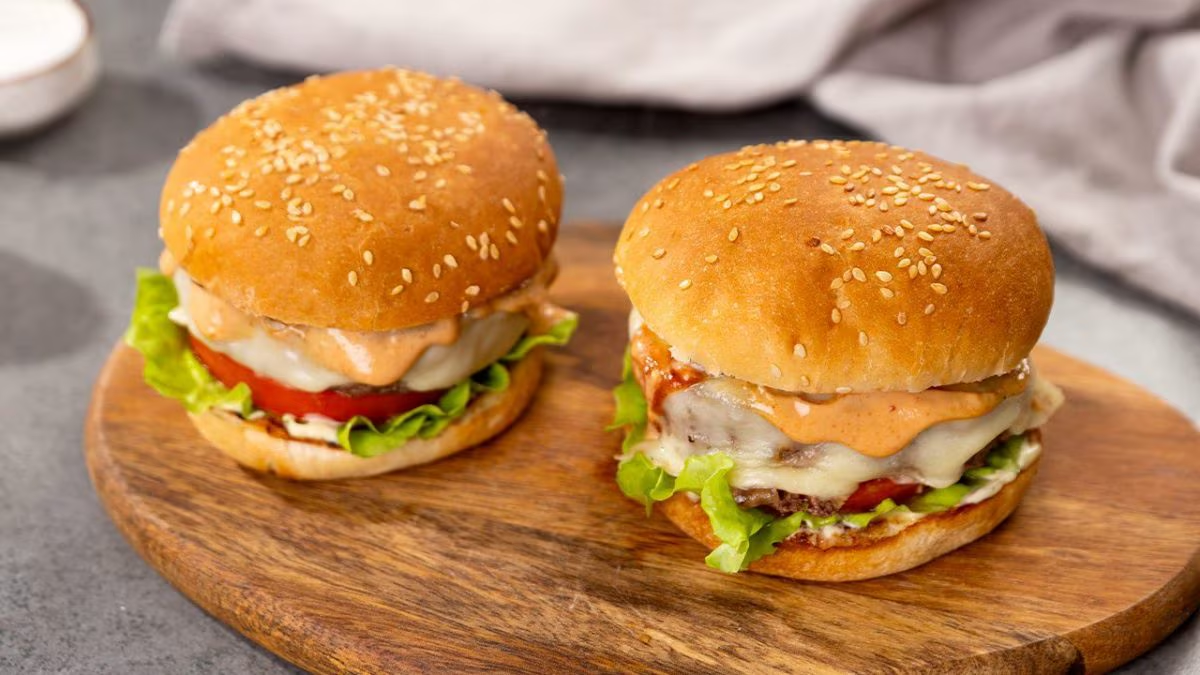
There is a deeply rooted, almost ancestral magic to that first bite of a truly great burger. When done right, it isn’t just fuel—it is an absolute celebration of culinary physics. Think about the sensory alignment: a pillowy, gently caramelized bun, the primal hiss of a deeply seared, drippingly juicy patty, a heavy blanket of gooey melted cheese, the crisp, earth-born crunch of garden-fresh vegetables, and a rich, tangy sauce that ties the whole universe together. It’s no wonder this humble stack is the undisputed champion of comfort food.
But here is the real truth: making a mind-blowing, restaurant-quality burger at home is not only entirely doable, it’s remarkably simple. It doesn’t require culinary school or a commercial kitchen. It just takes an understanding of how fire interacts with meat, a respect for raw ingredients, and a handful of straightforward techniques. When you take the reins at home, you unlock total creative freedom. You step away from the assembly line and step into a process that is organic, intentional, and tailored precisely to your mood.
The Natural Superiority of the Home Kitchen
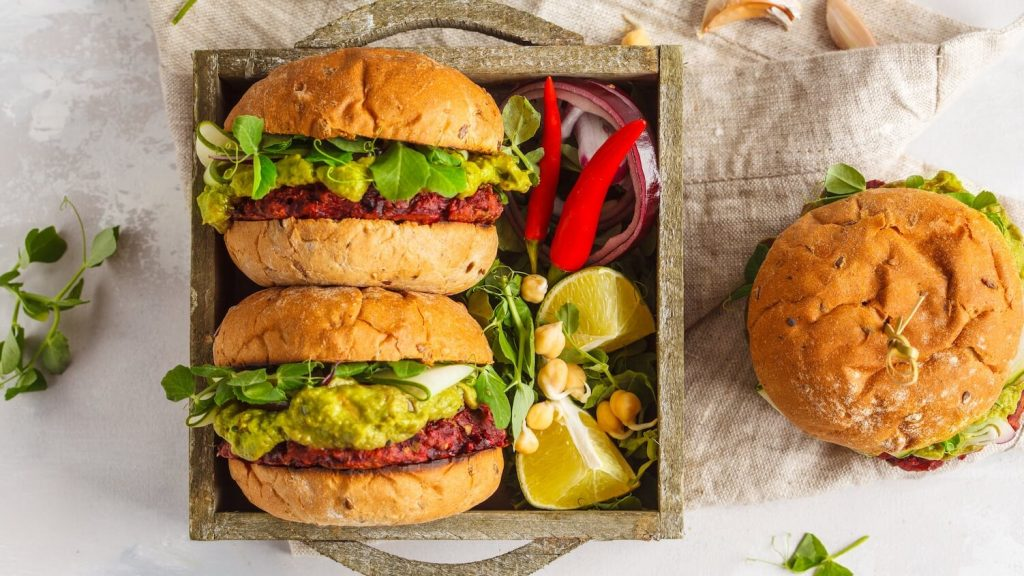
The real joy of cooking from scratch is that you become the conscious curator of everything on your plate. Fast-food chains and even casual sit-down restaurants often rely on frozen, pre-formed patties laced with preservatives to delay decay, alongside mass-produced produce and buns engineered to survive months on a shelf.
When you build a burger in your own kitchen, you honor the ingredients. You can hit up a local butcher for a fresh, coarse grind, pick up vibrant vegetables plucked straight from the earth at a farmers’ market, and grab a bag of fresh, artisan bread from a neighborhood baker. If someone at the table has specific dietary goals—whether they’re leaning into whole, clean foods, watching their sodium, or avoiding gluten—you can effortlessly pivot without sacrificing an ounce of flavor.
Beyond the health perks, the kitchen becomes an experimental playground. Want to mix a dash of wild honey into your mustard? Want to see how a slice of smoky gouda tastes paired with grilled summer peaches? Go for it.
Grounding Your Burger: The Anatomy of the Patty
If the patty fails, the burger fails. It is the anchor of the entire experience, which means your choice of meat at the market is the most critical decision you will make.
The Wisdom of the 80/20 Balance
If you take away only one lesson from this guide, let it be this: never buy extra-lean beef for a burger. Lean blends, like 90/10 or 95/5, are fantastic for tacos or meat sauce, but they are the natural enemy of a juicy burger. When beef cooks, the muscle fibers contract and squeeze out moisture. Fat is the organic lubricant that keeps the patty tender, rich, and bursting with flavor.
For the ultimate burger, always look for an 80/20 blend (80% lean meat, 20% fat). Ground chuck is the gold standard because it offers a perfect balance of deep, beefy flavor and natural fat distribution. If you want to get creative, ask a butcher to grind a custom mix of boneless short rib, brisket, and chuck—this gives you a luxurious, buttery texture that rivals the finest steakhouses.
Freshness and Temperature
Whenever possible, buy meat that was ground fresh that morning rather than beef that has been tightly vacuum-sealed in plastic tubes for weeks. Freshly ground beef retains its natural air pockets, which leads to a lighter, more delicate texture when you take a bite.
Keep your ground beef in the deepest part of the refrigerator until the exact moment you are ready to shape the patties. If the meat sits out on the counter and reaches room temperature, the solid fats will begin to soften and liquefy. When that happens, the fat escapes onto your hands or the cooking surface, leaving you with a dry, crumbly burger.
Minimalist Seasoning: Letting Nature Shine
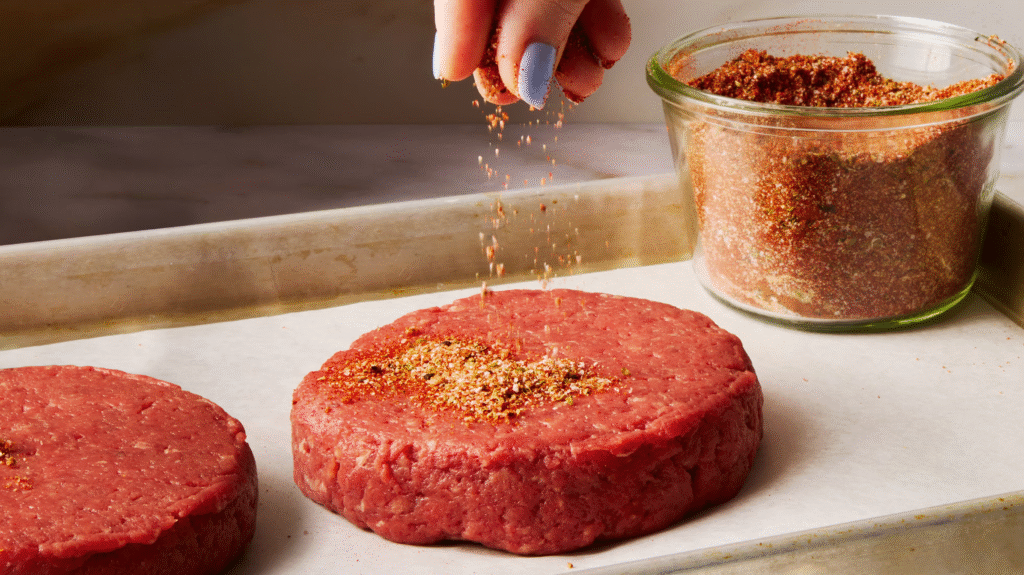
There is a massive, incredibly common misconception that a burger patty needs to be treated like a meatloaf. People love to dump breadcrumbs, cracked eggs, minced raw onions, chopped garlic, and a dozen different dried herbs directly into the raw meat bowl.
Please, step away from the spice rack.
When you mix ingredients directly into the ground beef and work it with your hands, you activate the proteins in the meat, causing them to cross-link and bond tightly. This turns your soft, airy beef into a dense, rubbery, sausage-like texture. A true burger should showcase the pure, unadulterated flavor of quality beef.
The best seasoning strategy is beautifully minimalist: Kosher salt and freshly cracked black pepper.
Do not salt your ground beef until after the patties are shaped. Salt dissolves muscle proteins and draws out moisture. If you mix salt into the meat before shaping, it turns the patties tough. Instead, shape your patties with completely unseasoned meat, and then right before they hit the hot pan or grill, shower the outside generously with salt and pepper. This creates a brilliant, savory, caramelized crust while keeping the interior incredibly tender.
Engineering the Perfect Disc
Shaping a patty is an exercise in restraint. The less you touch the meat, the better your burger will be.
Scoop up roughly 5 to 6 ounces of cold ground beef. Instead of squeezing and pressing it between your palms like you’re making a hard snowball, gently toss it back and forth between your hands until it just barely holds together in a cohesive disc. The goal is to keep the internal structure loose and full of tiny pockets where the melting fat can pool during cooking.
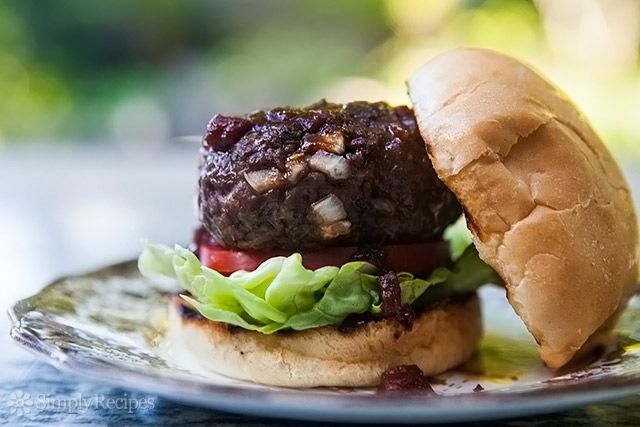
When beef hits heat, it releases water and the proteins tighten, causing the patty to pull inward and shrink in diameter while expanding in thickness. If you shape a patty to be the exact same size as your bun while raw, you will end up with a thick meatball sitting in the middle of a massive piece of bread. Always form your raw patties so they are roughly a half-inch wider than the circumference of your burger buns, and keep them around 3/4-inch thick.
Finding the Ultimate Bun
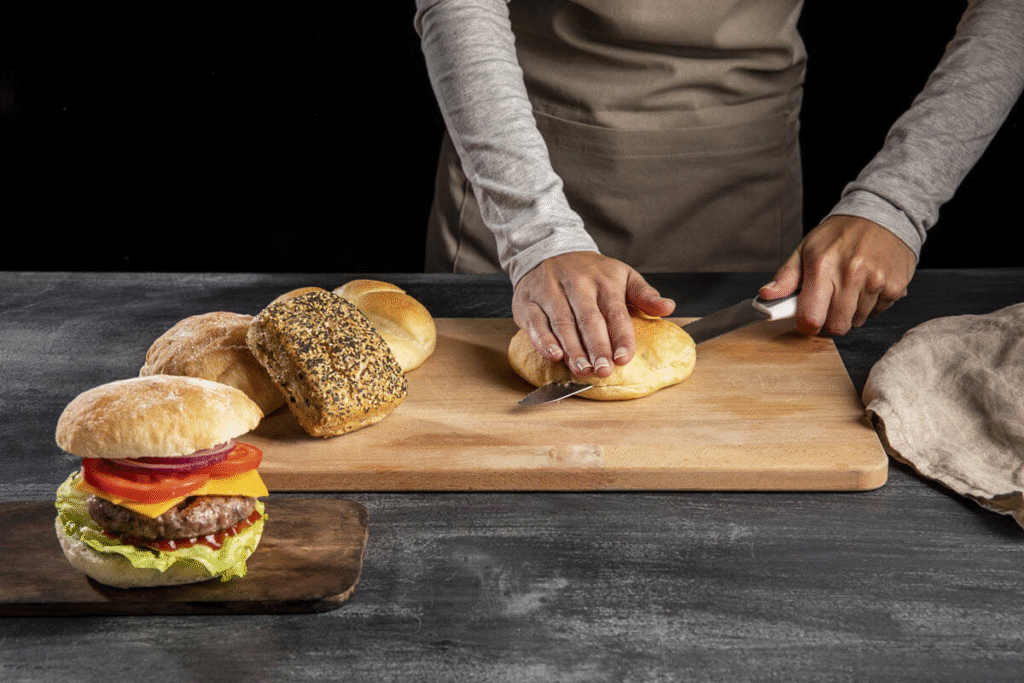
The bun is far more than an edible handle designed to keep your fingers clean. It is the structural framework of the entire meal. It handles the weight of the patty, absorbs the runaway juices, and provides a crucial textural contrast to the soft meat. Choosing the wrong bread can ruin an otherwise flawless burger.
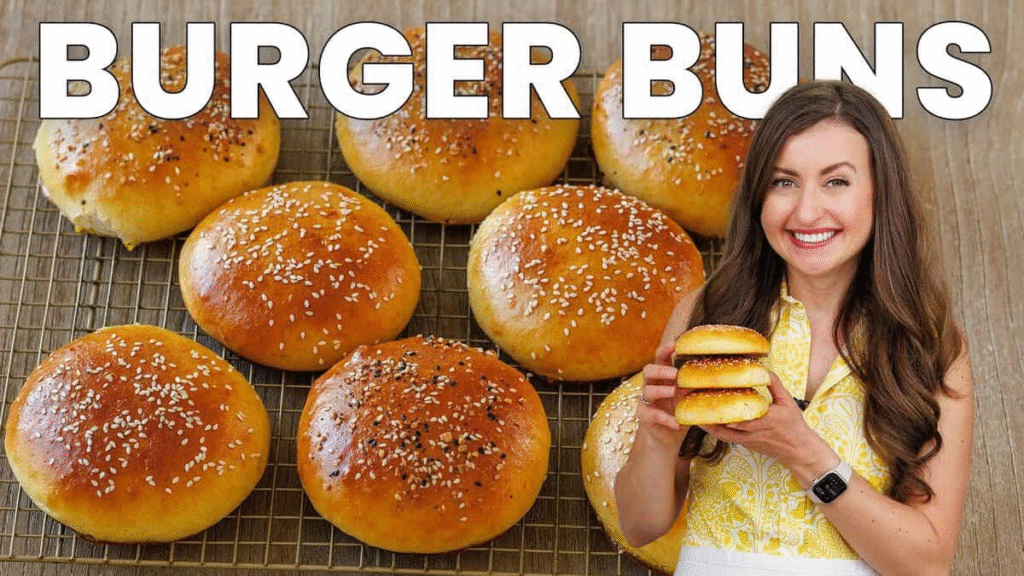
- Brioche Buns: Enriched with butter and eggs, brioche is incredibly soft, pillowy, and carries a subtle, elegant sweetness that balances out the intense savoriness of the beef.
- Potato Buns: A timeless, old-school favorite. They are incredibly squishy, durable, and have an almost elastic texture that compresses beautifully when you take a bite, keeping all the ingredients tightly locked in place.
- Sesame Seed Buns: The classic nostalgic choice. They offer a neutral flavor with a subtle, nutty crunch from the toasted seeds.
Execution: The Science of the Perfect Sear
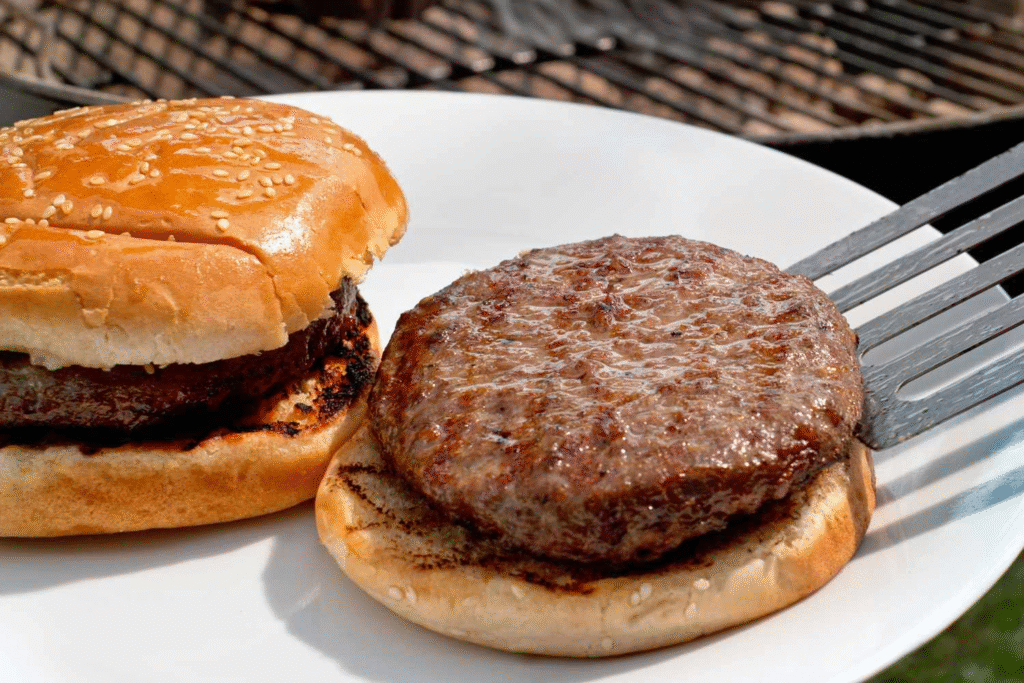
Whether you are cooking over an open-flame backyard grill or using a heavy cast-iron skillet on an indoor stovetop, the goal is exactly the same: you want to maximize browning. This is where heat meets amino acids and reducing sugars, creating that deeply flavorful, dark brown, caramelized crust on the outside of the meat.
Just like a prime steak, a burger patty needs to rest for about 2 to 3 minutes after it comes off the heat. If you bite into it immediately, all the roaring hot juices will run straight down your arms. Giving it a moment to rest allows the muscle fibers to relax and reabsorb those juices, ensuring that every drop of flavor stays inside the meat where it belongs.
Never drop a burger onto a lukewarm surface. If the pan isn’t hot enough, the meat will slowly simmer in its own juices, turning a sad, unappealing gray color. Whether it’s your grill grates or your skillet, heat it up until it is just starting to smoke.
Once the seasoned patty hits the hot cooking surface, do not touch it. Do not slide it around, and for the love of all things culinary, do not press down on it with a spatula.
The Fresh Harvest: Balancing the Richness
Using fresh, seasonal produce improves both appearance and flavor. Crisp lettuce, ripe tomatoes, sliced onions, crunchy pickles, avocado, grilled mushrooms, roasted peppers, and caramelized onions all make excellent additions.
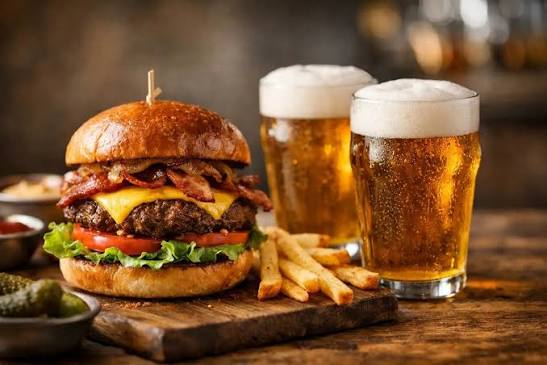
A great burger is a study in natural contrasts. The patty and cheese are warm, heavy, fatty, and rich. To prevent the meal from feeling too heavy, you need fresh, cold produce to slice through that richness with acidity, brightness, and crunch.
Combining these cold, crisp elements with the warm, savory meat creates a satisfying contrast in every single bite.
The Blueprint: Stacking for Stability
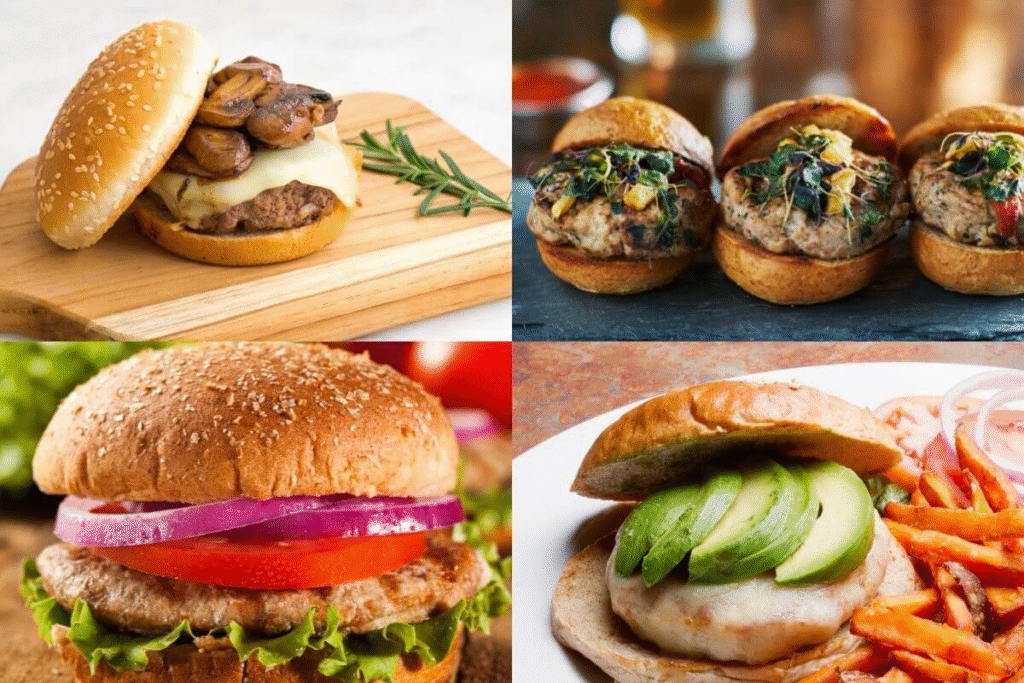
How you stack your burger is an engineering problem. If you assemble things haphazardly, the burger will structurally fail: the bun will get soggy, the slippery ingredients will shoot out the back when you take a bite, and your hands will be a disaster.
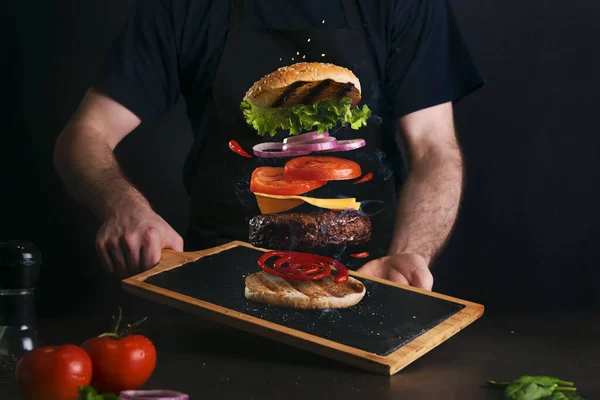
To create a stable, perfect bite, assemble your burger from the bottom up using this strategic blueprint:
- Bottom Bun: Toasted and slathered with burger sauce to form a waterproof barrier.
- Pickles & Onions: Nestled safely into the bottom sauce layer so they don’t slide around.
- The Juicy Patty: The heavy anchor of the burger, topped with beautifully melted cheese.
- Tomato Slice: Placed on top of the cheese so it doesn’t slip.
- Lettuce: Acts as an umbrella to shield the top bun from rising steam.
- Top Bun: Slathered with more burger sauce.
Spreading a fat-based sauce (like mayonnaise or a custom burger sauce) directly onto the toasted bottom bun creates a barrier. This prevents the juices from the hot meat from seeping down and turning the bottom bread into mush.
FAQ’S
1. What makes a homemade burger juicy?
Using fresh meat with the right fat content and avoiding overcooking keeps burgers juicy.
2. Which bun is best for homemade burgers?
Brioche buns are a popular choice because they are soft, buttery, and flavorful.
3. Can I make a burger without beef?
Yes, you can use chicken, turkey, lamb, or plant-based patties.
4. Should I toast burger buns?
Yes, toasting the buns adds flavor and prevents them from becoming soggy.
5. What toppings go well on a homemade burger?
Lettuce, tomato, onion, cheese, pickles, and homemade burger sauce are classic choices.