

You have probably closed your laptop after a long workday, put your phone on silent, and finally reclaimed a little slice of time for yourself. Maybe your mind is leaning toward a fierce, competitive match with old friends, a slow-paced puzzle to unwind, or a lighthearted party game that gets the whole family laughing Games around the living room coffee table. Whatever your mood happens to be, the right game has a way of turning an otherwise unremarkable, quiet evening into something you genuinely look forward to all day.
Interactive entertainment has woven itself into the fabric of everyday life. You no longer need a dedicated gaming room, a high-end desktop rig, or expensive consoles to enjoy a rich experience. A smartphone easily fills a ten-minute coffee break; a console can serve as the centerpiece of a weekend gathering; and a simple, worn deck of playing cards can still spark hours of banter around the dining table.
That endless variety is precisely what makes gaming so universally appealing. There is no single “correct” way to play, nor is there a default blueprint for what a player should look like. Some people crave lightning-fast reflexes and high-stakes tension. Others prefer to unravel complex logic puzzles at their own leisurely pace. Certain players thrive on outsmarting everyone in the room, while others find their joy when the entire group operates as a single, coordinated team trying to pull off a shared victory.
What Really Makes a Game Worth Playing?

A truly captivating game does not need photorealistic visuals, hundreds of hours of content, or a convoluted, movie-length storyline to hold your attention. In fact, some of the most enduring designs in human history are built on surprisingly sparse foundations.Ultimately, the best game is never defined by its budget, its graphics, or its popularity—it is simply the one that perfectly matches your current state of mind.
Think about the games that stick with you: they are often the ones you can explain to a complete beginner in under two minutes. Everyone grabs the core concept immediately, the play begins, and within moments, the room is filled with friendly ribbing, strategic maneuvers, or collective groans over a costly misstep. That friction-free, immediate engagement is the hallmark of brilliant game design.
Of course, player motivations naturally split across several distinct axes:
- Cognitive Engagement: Do you want to flex your analytical muscles or completely disengage your active thoughts after a mentally draining workday?
- Social Dynamics: Are you seeking intimate, one-on-one rivalry, chaotic group energy, or peaceful solitude?
- Time Horizons: Is your goal a five-minute bite-sized distraction or an immersive, multi-hour campaign?
Understanding what you actually want out of your free time makes finding the right title effortless.
Micro-Sessions: Casual Gaming for Quiet Moments
Not every session needs to feel like a major commitment. More often than not, you only have a few stray minutes—sitting in a waiting room, riding public transit, or unwinding on the couch right before turning off the lights.

Casual games excel in these brief windows because they eliminate operational friction. Touchscreen puzzles, tile-matching mechanics, spatial word grids, and light arcade titles deliver quick hits of satisfaction without demanding that you memorize complex control schemes or keep track of long, winding plotlines.
You play a quick round, achieve a clean sense of closure, and put the device away. There is zero guilt about walking away mid-action, which is why these accessible experiences form the backbone of modern mobile play. A well-designed micro-game acts as a mental palate cleanser, offering just enough stimulation to reset your focus before you pivot back to real-world tasks.
The Social Magic of Local & Cooperative Play
While solitary play offers great relaxation, bringing other people into the fold transforms the medium entirely. Shared physical or digital space turns a static system into a dynamic canvas for human emotion, where the game itself often takes a backseat to the social interactions unfolding around it.
The Chaotic Fun of Party Games
When hosting a mixed crowd, accessibility is everything. Complex rulebooks and long setup times kill the momentum of a gathering. Great party titles rely on intuitive, human-centered activities:
- Bluffing & Deductions: Players rely on social cues, vocal inflections, and body language rather than controller skill.
- Creative Prompting: Drawing, acting out absurd scenarios, or completing speed-word associations puts everyone on equal footing.
- Asymmetric Chaos: Short, unpredictable rounds ensure that even inexperienced players can pull off surprising, game-winning moves.
The goal of a standout party game is not to crown an elite winner; it is to pull everyone out of their shells and spark genuine conversations across the room.
The Bonds of True Cooperation
Conversely, cooperative mechanics offer a refreshing change of pace from constant head-to-head competition. By forcing players to share resources, assign specialized roles, and communicate under pressure, co-op games shift the dynamic from me versus you to us versus the problem.
Whether you are navigating a frantic virtual kitchen or coordinating a tactical board game defense against an spreading epidemic, the collective triumph following a near-disaster builds a unique sense of camaraderie. When the group succeeds, the victory feels earned because every single person played an active part in it.
Deep Systems for the Analytical Mind

For players who view free time as an opportunity to sharpen their intellect, casual distractions rarely satisfy. They want deep systems, meaningful choices, and problems that demand real focus.
Puzzles and Spatial Logic
Logistical puzzles, spatial tiling, and number-based challenges hook the brain by creating controlled, solvable friction. Unlike real life—where problems are often vague and endless—a good puzzle operates within clear, defined boundaries. Staring at an intricate grid, testing hypotheses, suffering through mental roadblocks, and finally discovering that clean, logical breakthrough delivers a genuine rush of dopamine. It offers a structured space where effort directly yields a clear result.
Grand Strategy and Resource Management
Strategy games take high-level thinking a step further by introducing long-term planning and hard trade-offs. Instead of simply reacting to immediate prompts, you must manage limited resources, anticipate your opponent’s next five moves, and weigh short-term sacrifices against long-term goals.
The tension in a great strategy game comes directly from agency. When a plan comes together after an hour of deliberate setup, the satisfaction is unmatched. And when a strategy collapses due to a single oversight, it doesn’t feel cheap—it becomes a valuable lesson for your next attempt.
Narrative, Worldbuilding, and Digital Escapism
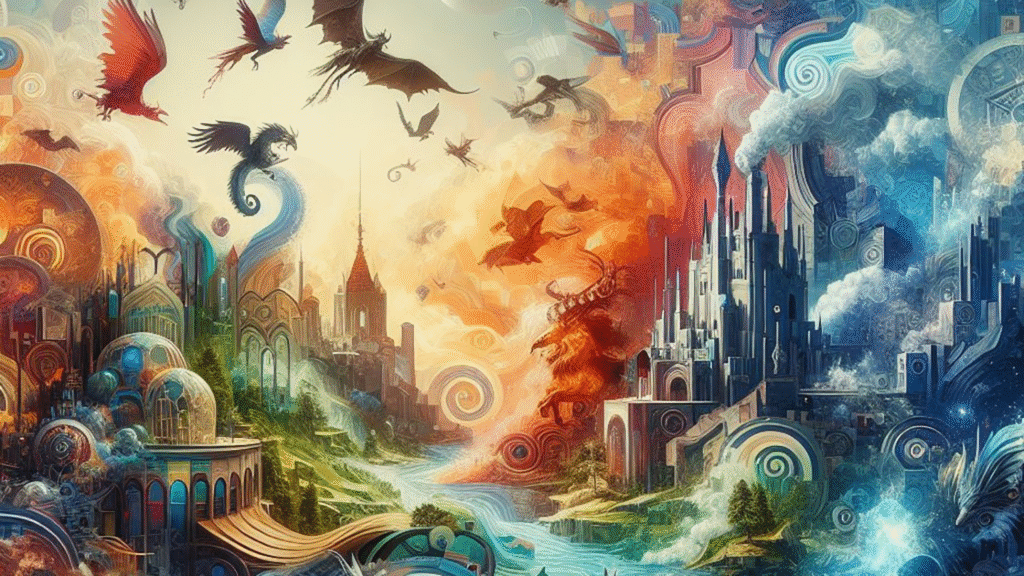
If you love books, cinema, and worldbuilding, interactive storytelling offers something no passive medium can match: personal presence. You aren’t just watching a protagonist make a tough decision from the safety of an audience seat—you are the one forced to make the call.
Adventure and narrative-focused titles carry you away to breathtaking worlds, deep historical periods, or surreal sci-fi landscapes. Through environmental details, quiet moments of discovery, and branching dialogues, these games pull you deeply into their fiction.
Making choices that alter character relationships or change how the story turns out builds a deep sense of ownership over the narrative. When a story hits all the right emotional beats, it leaves a lasting impression long after the credits roll.
High-Energy Digital Arena: Racing and Sports
Sometimes, you want to skip long setups and deep storylines and jump straight into raw, visceral competition. Racing and sports titles provide instant clarity: clear objectives, immediate feedback, and simple ways to measure your progress.
A great racing game balances precision with pure adrenaline. Whether you are aiming for pixel-perfect turns in a realistic simulator or throwing absurd items at your friends in an arcade racer, the thrill of a photo-finish victory never gets old.
Similarly, digital sports bring real-world rivalries right onto your screen. Controlling your favorite athletes, executing complex tactical plays, or building a dream roster adds a deeply personal layer to the competition. Even better, these games often lead to the funniest moments when players stumble through unexpected errors or pull off miraculous, last-second plays against all odds.
Open Sandbox & Simulation: Unwind at Your Own Pace
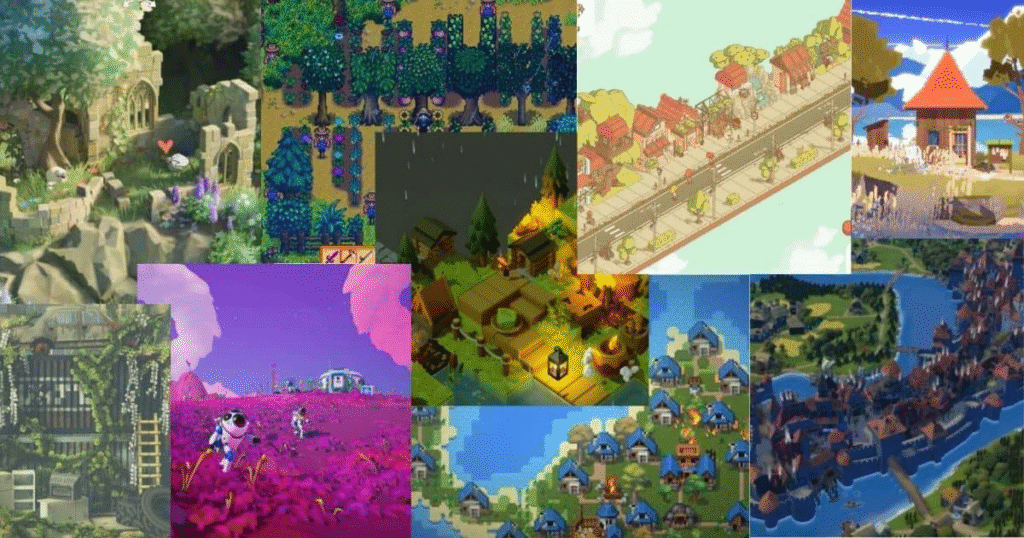
At the opposite end of high-speed competition sit simulation and sandbox games. These experiences strip away traditional win conditions, timers, and high-pressure challenges, replacing them with open-ended creative freedom.
In a sandbox simulation, you might spend your evening designing a bustling city, organizing a quiet digital farm, balancing a complex economic engine, or building intricate architectural structures from scratch.
The appeal lies entirely in setting your own goals. There is no ticking clock pushing you forward, nor an opponent actively undermining your progress. For anyone looking to decompress after a chaotic, high-stress day, sinking into a peaceful, self-paced simulation is one of the most therapeutic ways to spend an evening.
Low-Tech Charm: The Enduring Appeal of Tabletop Play
In an age dominated by high-resolution screens and constant digital notifications, low-tech tabletop games hold a unique power. A simple deck of cards or a well-designed board game offers a rich social experience without relying on displays, internet connections, or power outlets.
Gathering around a table forces everyone to be physically present. Without the barrier of a monitor, body language, subtle bluffs, and spontaneous side conversations happen naturally.
The physical components themselves—shuffling cards, rolling wooden dice, moving heavy ceramic tokens across a board—bring a satisfying, tactile feel that digital interfaces can’t replicate. Sinking into a tabletop game remains one of the most grounded ways to connect with the people right in front of you.
Matching the Game to Your Daily Vibe

With so many genres and platforms available, picking the right game boils down to assessing your energy levels, your social needs, and your available time.
To find the right fit for your evening, ask yourself three quick questions:
- How much mental energy do I have left? If you are exhausted, pass on high-intensity strategy or fast-paced competitive games. Reach for an open sandbox, a light puzzle, or a cozy simulation instead.
- Who else is involved? If you are hosting a group with mixed experience, put away dense rulebooks. Pick accessible party titles or intuitive card games that get everyone involved immediately.
- How much uninterrupted time do I actually have? Don’t launch a complex narrative campaign if you only have twenty minutes before dinner. Match your choice to your window of free time so you aren’t left feeling cut off mid-stride.
The Real Value of Play
It is easy to view gaming as just a way to kill time, but that misses the bigger picture. We play to unwind, to share a laugh, to push our skills, to connect with friends, and to temporarily step outside the stress of our daily routines.

The most memorable gaming moments are rarely the ones that go strictly according to plan. They are the hilarious missteps, the wild long-shot comebacks, the ridiculous bluffs that somehow worked, and the quiet late-night breakthroughs after hours of trying.
These shared experiences turn into lasting memories—and that personal connection is what sets interactive play apart from simply staring at a screen. You aren’t just watching a story unfold; you are actively taking part in it.
FAQ’S
1. What are the best entertainment games to play?
Puzzle, racing, adventure, strategy, multiplayer, party, and simulation games are popular choices.
2. Which games are best for playing with friends?
Multiplayer and party games are great for friendly competition and group entertainment.
3. Are mobile games good for entertainment?
Yes. Mobile games are convenient and offer everything from quick puzzles to multiplayer adventures.
4. What games are good for relaxing?
Casual, puzzle, simulation, and simple strategy games can be great choices when you want to unwind.
5. Can traditional games still be entertaining?
Absolutely. Card and board games remain fun options for families, friends, and social gatherings.